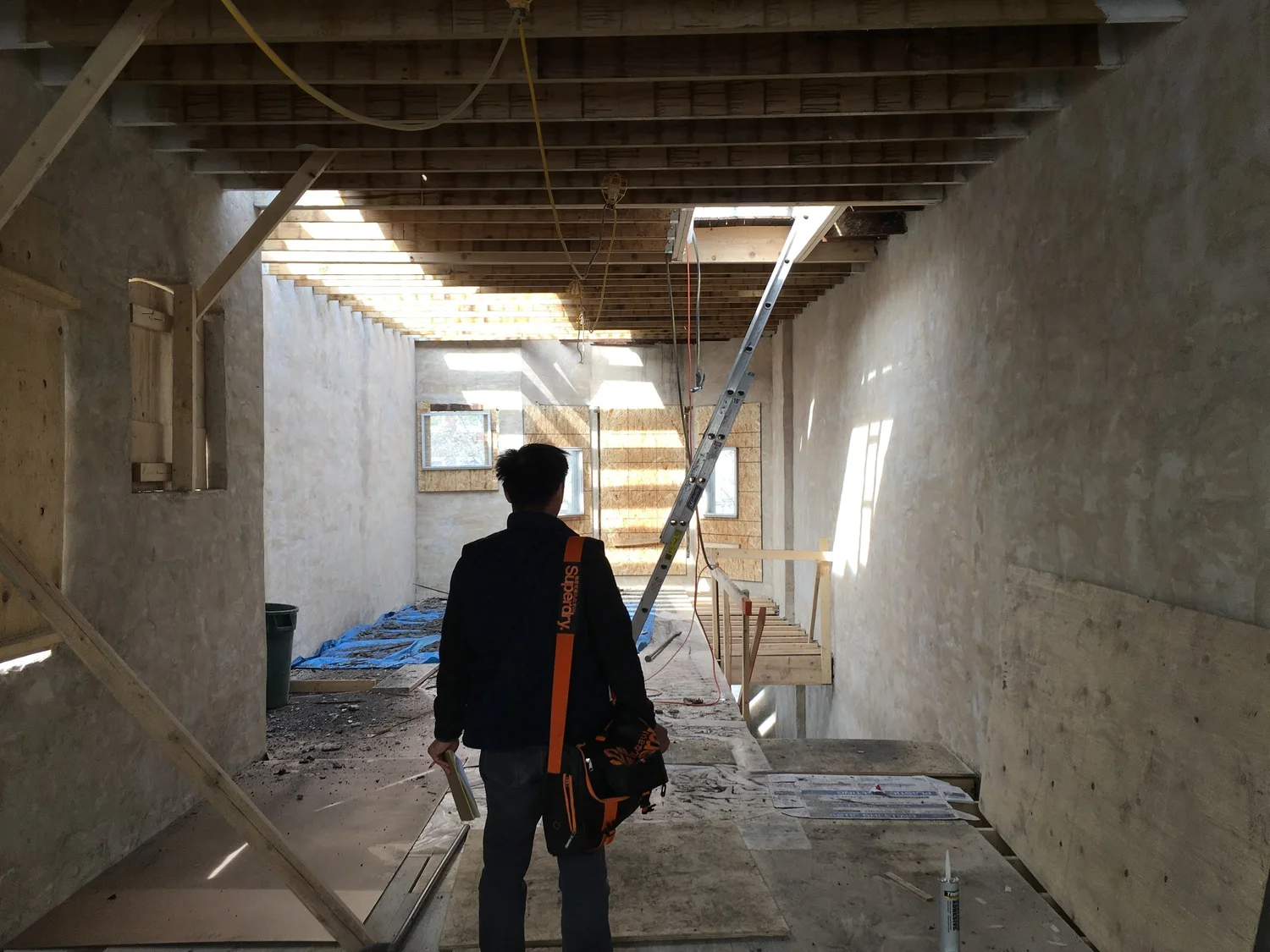
This project was certified on July 19, 2018.
Certification Process Partners
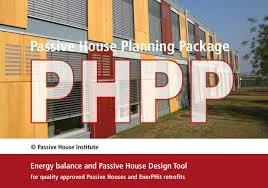
Certification requires considerable effort by many parties and it's not a given. To achieve certification a Design Consultant builds the PHPP (Passivhaus Planning Package) that considers every cubic inch of the building, the building's climate zone and historical temperature differentials, the building's solar orientation and seasonal effects, the the building's actual materials and the manner in which they are assembled. Given these factors, if the building meets the energy budget imposed by the standard, then the certification process proceeds into and throughout the construction phase. Along the way, third party quality assurance professionals independently verify that the construction plan is actually implemented. At the end of the process a final "blower door test" must show that the standard's air tightness requirement has been achieved.
The building's annual heating and cooling energy demand limit for EnerPHit certification for any renovation must be less than or equal to 7.92 kBTU/sqft/yr.
The air tightness limit for EnerPHit certification for any renovation must be less than or equal to 1.00 ACH at 50 Pascals.
Certification occurs if the construction plan is determined to have been met by third party quality assurance professionals and then, if and only if, the energy limit and air-tightness limits were met.
This three part approach ensures that everyone can rely on a Passivhaus Institut Certified Building to provide the highest standard of comfort, healthfulness and energy efficiency. Less combustion equals greater comfort and greater health.






THE PASSIVHAUS INSTITUT BUILDING STANDARD
Click on any of these links to learn how the world's most highly regarded, most rigorous and most energy efficient building standard is changing the world for the better.